
1. Pick the island, date, and guest count
These three facts decide everything else. The guest count sets the size of the show, the amount of food, and the space you need. Popular dates fill early, so check the date with us before you send invitations. For large company programs, plan further ahead than you would for a family dinner.
2. Confirm the venue and what it allows
A hotel lawn, a timeshare, a rental home, and a private estate each have their own rules. Ask the property about amplified sound and end times, staging space, open flame (fire knife dancing needs approval), and outside catering. Send us the address and the property contact; we confirm these points with the venue before anything is booked.
3. Choose the entertainment
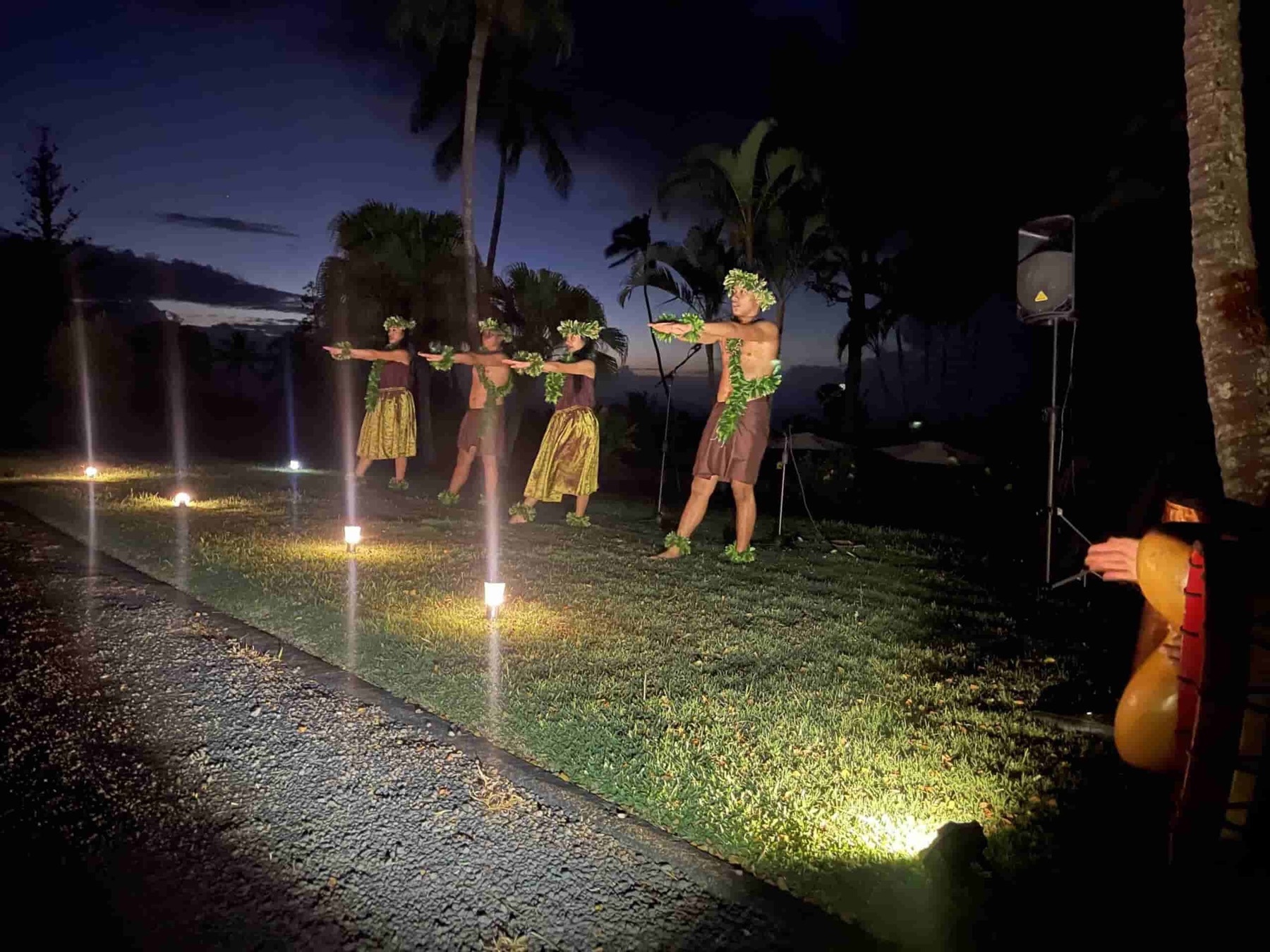
A lūʻau show is live Hawaiian music and hula, and often Tahitian dance and a fire knife dancer at the end. Our private packages run from two dancers and one musician up to five dancers, three musicians, a fire knife dancer, and an emcee. Fire is included in the two larger packages and is an add-on for the two smaller ones. Bigger lawns and larger groups need a bigger lineup so everyone can see and hear.
4. Arrange the food
Traditional lūʻau food includes kālua pig, poi, poke, lomi salmon, chicken long rice, and haupia (coconut pudding). Most venues have their own catering or an approved caterer. Decide buffet or plated service, and collect dietary needs from your guests early.
5. Build the timeline around sunset
Most lūʻaus start before sunset. A common order is arrival with music and leis, dinner, then the show, with fire knife dancing last because it shows best in the dark. Look up the sunset time for your date and plan backward from it.
6. Plan for weather
Rain and wind happen, even on the dry side of each island. Agree on a covered backup space or a tent with the venue before the day. Wind can stop a fire performance, so ask what the venue does if conditions are not safe.
7. Add activities if you have time
Lei making, a hula lesson, or ʻukulele can fill an afternoon before the evening event. For a small group, a lesson alone can replace a full show.