Where the word comes from
Lūʻau is the Hawaiian word for taro leaf, an ingredient in dishes served at the feast. The older name for the feast itself was ʻahaʻaina. The modern lūʻau, where everyone eats together, is usually traced to 1819, when King Kamehameha II ended the ʻai kapu, the religious rule that men and women ate separately. English speakers began calling the feast a lūʻau in the mid-1800s.
Arrival: the lei greeting
Guests are welcomed with a lei, a garland of flowers or shells, placed over the shoulders. Accept it, say mahalo, and wear it for the evening; taking a lei off in front of the person who gave it is considered rude. At most lūʻaus there is a cocktail hour with live Hawaiian music, and often cultural activities: lei making, ʻukulele, hula lessons, or a look at the imu.
The imu ceremony
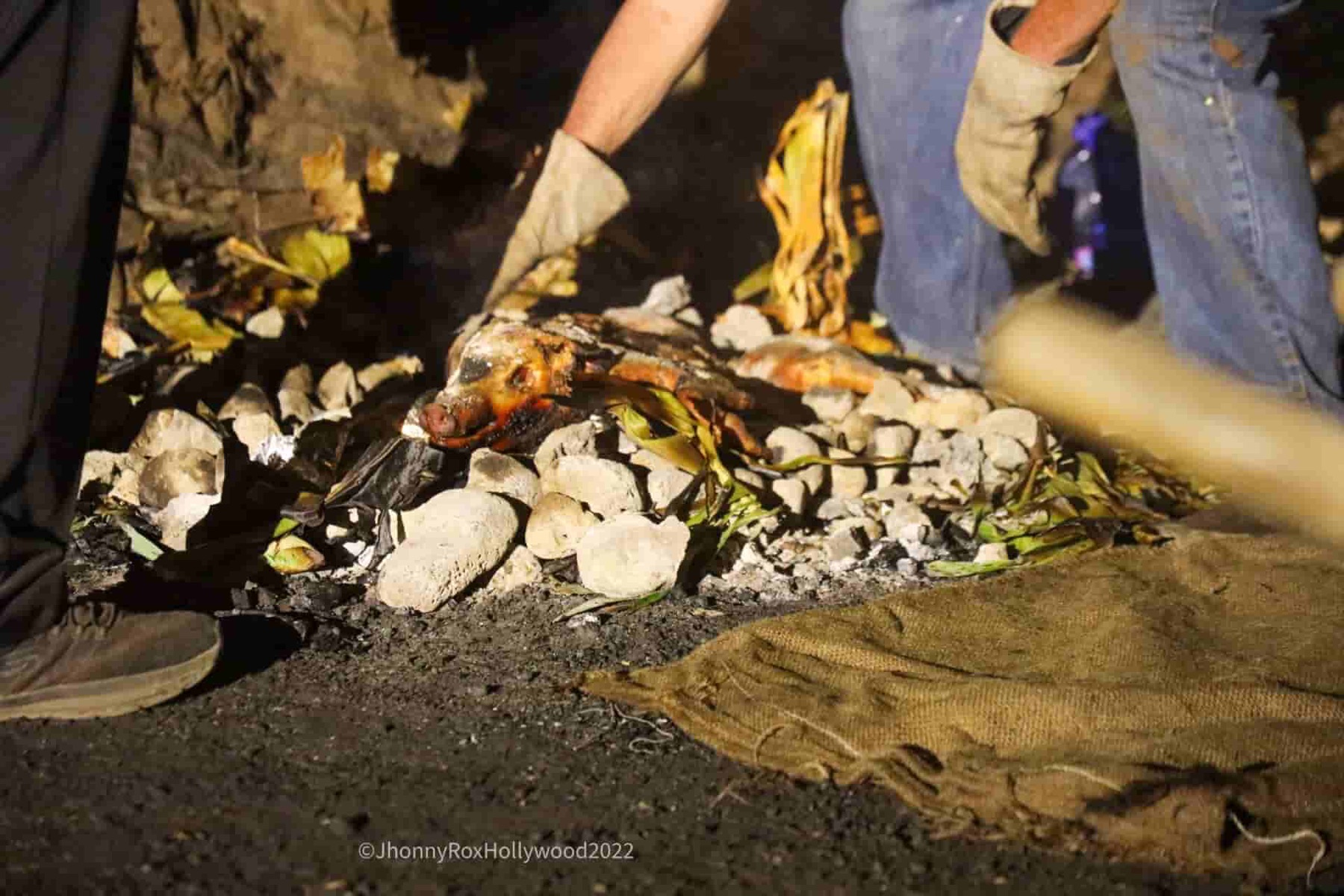
The imu is an underground oven. A pit is lined with hot lava rocks, the pig is wrapped in ti and banana leaves, buried with the rocks, and cooked for most of the day. Before dinner the imu is opened in front of guests and the kālua pig is lifted out. Kālua means to cook in an underground oven; the shredded, smoky pork is the center of the meal.
The food
A lūʻau menu usually includes kālua pig; poi, the pounded taro paste eaten with the fingers; laulau, pork or fish wrapped in taro leaf and steamed; lomi lomi salmon, a salted salmon and tomato salad; poke, cubed raw fish seasoned with sea salt and seaweed; chicken long rice; sweet potato; and haupia, a coconut pudding, for dessert. Rice, salads, and non-traditional dishes are normal alongside them.
Poi is an acquired taste for many visitors. Try it with a bite of kālua pig or lomi salmon rather than on its own.
The show
The performance usually opens with hula kahiko, the ancient style danced to chant and drum, then moves into hula ʻauana, the modern style with ʻukulele and guitar. Many shows then travel through Polynesia: Tahitian ʻōteʻa with its fast drumming and hip movement, and songs or dances from Sāmoa, Aotearoa, or other islands. The finale is almost always the Samoan fire knife dance, siva afi, in which a performer spins a knife with both ends aflame.
At our shows the emcee explains each dance before it begins. Feel free to clap, cheer, and take photos without flash; some shows invite guests on stage for a hula lesson near the end.
Public lūʻau or private lūʻau?
A public lūʻau is a ticketed show with a set menu and a set start time. On Maui, ours are Huakaʻi Lūʻau at Kaʻanapali Beach and Aloha Wailea Lūʻau in Wailea. A private lūʻau is the same food and performers brought to your own venue for your own guests, on your schedule, with the program sized to the group. Families, weddings, and companies book private lūʻaus on Maui, Oʻahu, Kauaʻi, and the Big Island.