Kahiko attire
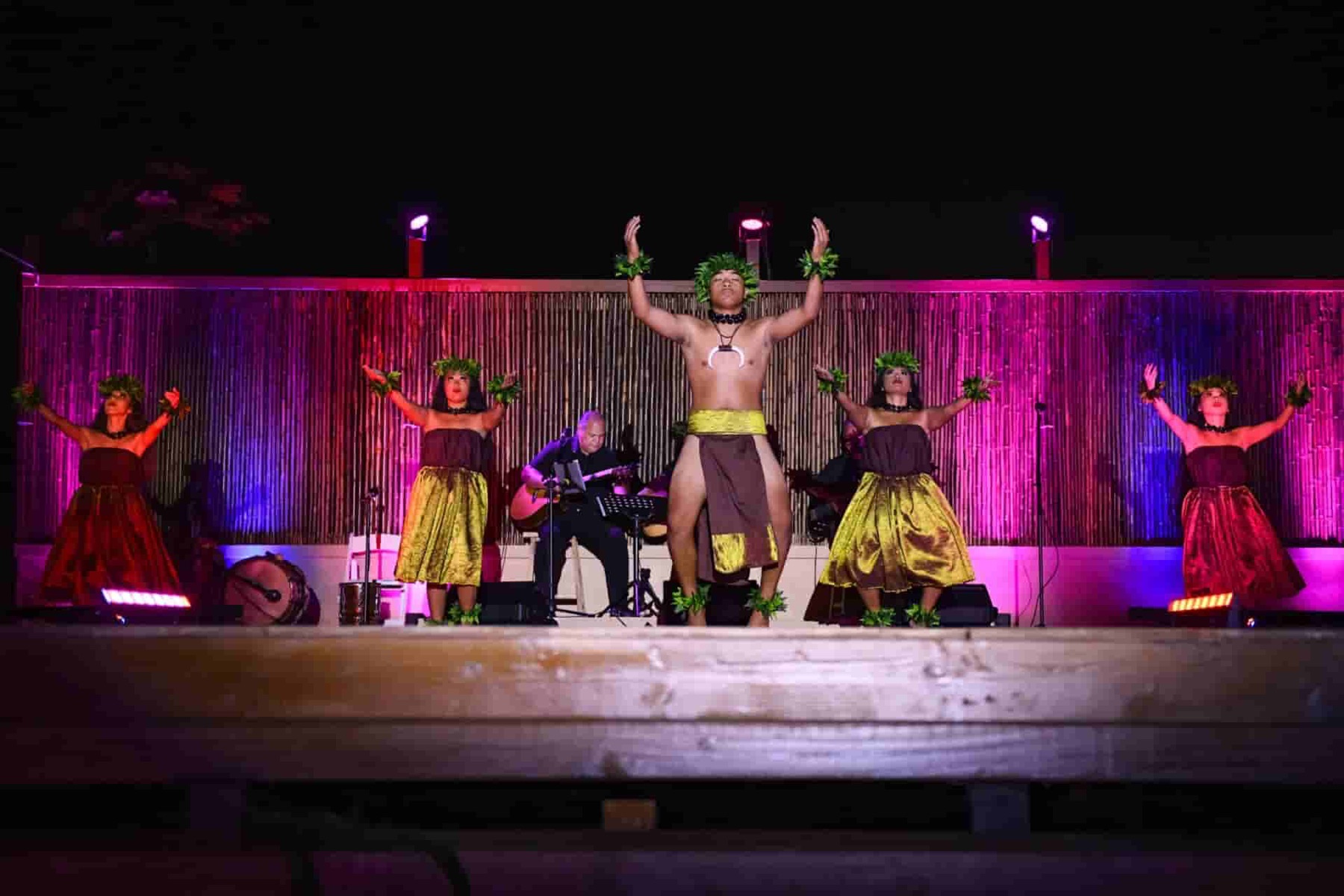
Hula kahiko is the ancient style, so its attire stays close to what was available before Western cloth. Women wear a pāʻū, a skirt wrapped several times around the waist. Historically it was kapa, a bark cloth made from wauke (paper mulberry) and printed with plant dyes; today most hālau use plain cotton in a solid color chosen by the kumu hula. A skirt of fresh ti leaves (lāʻī) tied to a waistband is also common and rustles with the movement.
Men wear a malo, a loincloth wrapped and tied at the hip, sometimes with a short pāʻū over it. Chests are bare or covered with a kīhei, a rectangle of cloth tied over one shoulder.
The lei of the forest
Kahiko dancers wear greenery, not flowers. The lei poʻo circles the head, the lei ʻāʻī hangs at the neck, and kūpeʻe wrap the wrists and ankles. They are made from palapalai fern, maile vine, ti leaf, ʻaʻaliʻi, and other plants gathered with permission and, in the old practice, with a chant asking the forest for them. The plants are associated with Laka, the patron of hula, and a hālau treats them as sacred rather than decorative.
Because the lei are fresh, dancers make them the day of a performance. At a lūʻau you will often see the kahiko set open the evening while the greenery is still crisp.
ʻAuana attire
Hula ʻauana is the modern style, developed after Western contact, and its attire reflects the 19th and 20th centuries. Women wear long dresses in the holokū or muʻumuʻu tradition, or a fitted top with a long skirt, in fabrics chosen to match the song. Men wear aloha shirts with slacks or a pāʻū, sometimes with a sash.
Flower lei replace the forest greenery: plumeria, pīkake, ʻilima, orchid, and tuberose, with a haku lei (braided head lei) of flowers. Hair is worn down for women, often with a flower behind the ear.
About the grass skirt
The stiff, dry ‘grass skirt’ that appears on postcards and party costumes is not traditional Hawaiian attire. It came to Hawaiʻi with performers from other Pacific islands and was adopted by early 20th-century tourist shows and Hollywood. Hawaiian skirts are kapa, cloth, or fresh ti leaf. If you are buying a hula costume for a child’s party, a cloth pāʻū and a ti-leaf or fabric lei are closer to the real thing and more comfortable to dance in.
Implements
Some hula are danced with implements that are almost part of the attire: the ipu (gourd) or ipu heke (double gourd) struck by the dancer or the chanter, puʻili (split bamboo rattles), ʻulīʻulī (feathered gourd rattles), ʻiliʻili (smooth stones clicked in each hand), and kālaʻau (hardwood sticks). Each has its own hula and its own sound.
When Melody Masoe designs the attire for our shows and private events, she chooses the pāʻū color, the lei plants, and the implements to match each mele. If you book a performance, ask; we are happy to explain what the dancers are wearing and why.